
BACK TO BASICS: SKETCHING PLANTS
- R S
- Mar 15
- 1 min read


Recently, I had the opportunity to attend a CPD drawing session with the Society of Garden Designers, focusing on the art of sketching and representing plants across different planes. The session was both inspiring and highly practical, reinforcing how fundamental drawing skills can enhance landscape design work.
We began by breaking down plants into their basic shapes, drawing them in plan and elevation. This approach helps simplify complex forms, making it easier to understand proportions and spatial relationships when planning a garden layout.
From there, we progressed to rough sketches, capturing individual leaf types, textures, and orientations. Observing the subtle differences between plants—how leaves overlap, twist, or fan out—added a new level of depth to our drawings. It was a reminder that understanding the form and structure of plants is as important as their placement in a design.
One of the most valuable aspects of the session was practicing plant layering and depth, learning to convey which elements sit in the foreground, middle, or background. This skill is essential not only for accurate visual representations but also for effective planting design, ensuring clarity and balance in both conceptual sketches and final presentations.

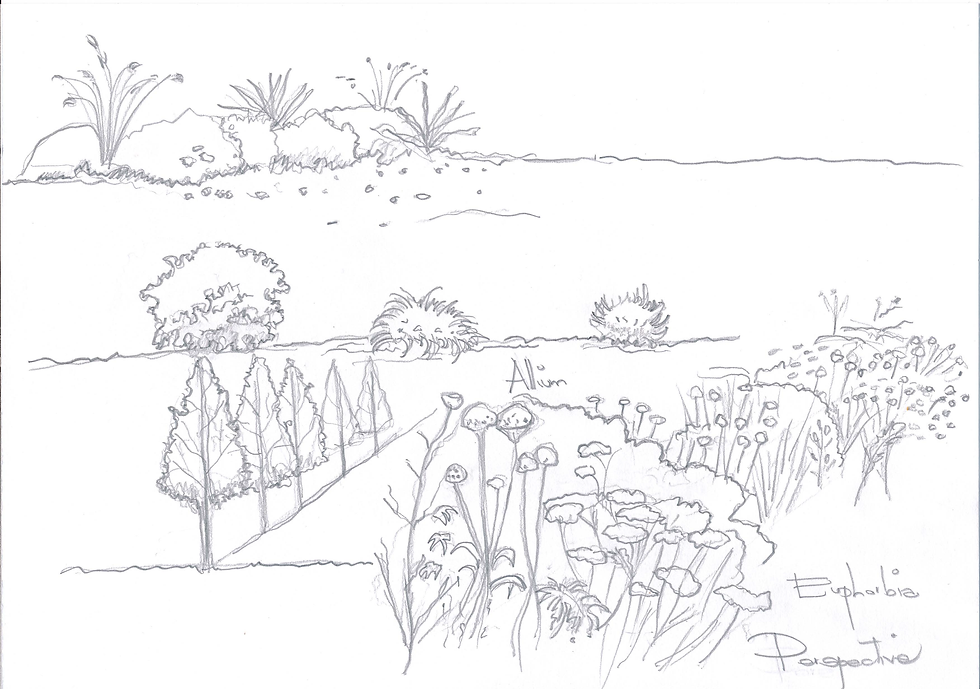


Attending this session reinforced my belief that drawing by hand is an indispensable tool for landscape architects. Even in an era dominated by digital design, these skills allow for a more intuitive understanding of plants, composition, and texture—qualities that bring designs to life on paper before they reach the ground.


Comments