
HELMINGHAM HALL, SUFFOLK: LANDSCAPE REVIEW
- R S
- Mar 13
- 4 min read

My visits to Helmingham Hall — first in the summer of 2023 & again in 2024 — offered an opportunity to experience how a historic Suffolk estate landscape can evolve while retaining its essential character.
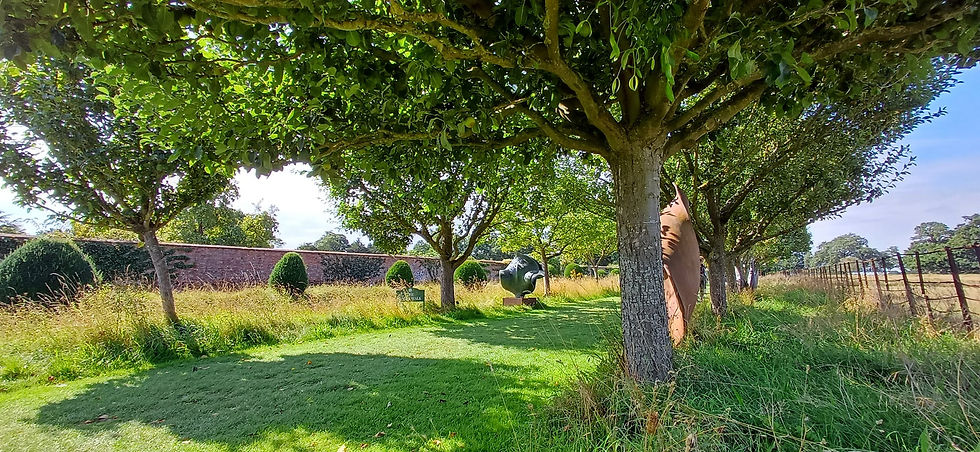
The visitor journey begins from the parking area, following a formal route along the northern edge of the gardens beside the moat & beneath lines of fruit trees, traditionally planted as orchard species common to English estate gardens such as apple (Malus domestica) and pear (Pyrus communis). The path frames the first impression of the landscape: a carefully balanced composition of managed & natural elements.
Long grasses soften the edge of the moat, their movement in the breeze contrasting with the sculptural forms of clipped yew specimens (Taxus baccata). This juxtaposition creates a landscape that feels structured yet relaxed — a formal framework softened by ecological planting & naturalistic management.
The grasses line the pathways while the routes themselves are kept neatly mown. This simple intervention performs both practical & aesthetic roles: maintaining accessibility while reinforcing the geometry of the garden layout. The result is a landscape that feels ordered without being overly controlled.
Beyond the moat, expansive views open across golden pastureland where grazing deer move between dispersed trees. These distant scenes anchor the garden within its wider estate setting & reinforce a strong sense of landscape continuity. The warm hues of the summer pasture contrast with the manicured green pathways that guide the visitor along the garden’s perimeter.
Despite the proximity of the surrounding farmland, a delicate steel fence — barely perceptible in the landscape — defines the boundary between the homestead garden & the pastoral fields beyond. Its visual subtlety allows the long grasses & meadow vegetation on both sides of the fence to merge visually, creating a sense of seamless transition between cultivated garden & working countryside.
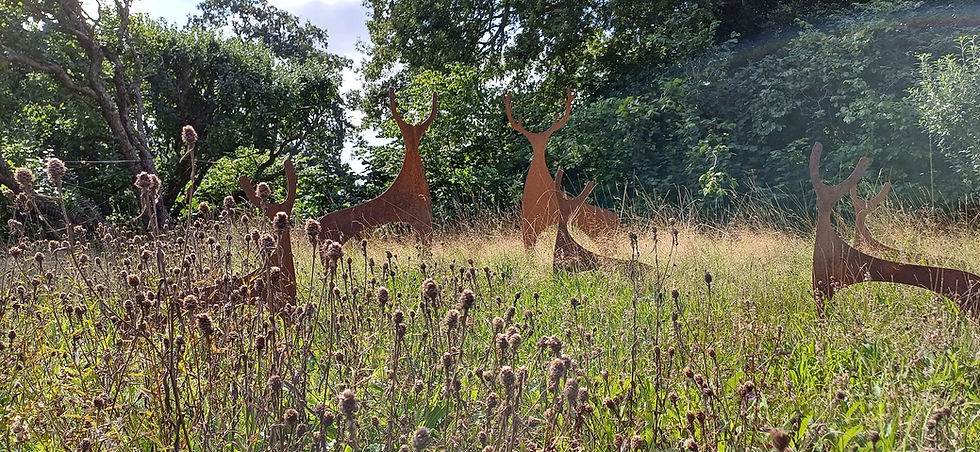
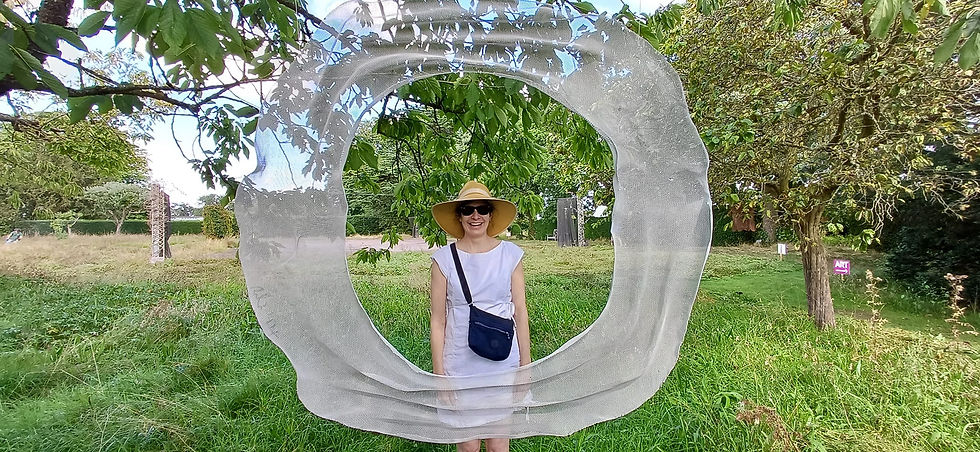
Sculptural installations punctuate the landscape in a way that complements rather than dominates the setting. Many pieces are deliberately understated, their natural tones & organic forms echoing the surrounding vegetation. Cast metal emblems of sheep & pigs appear among the taller vegetation, reflecting the agricultural character of Suffolk while adding a light & playful sense of identity to the landscape.
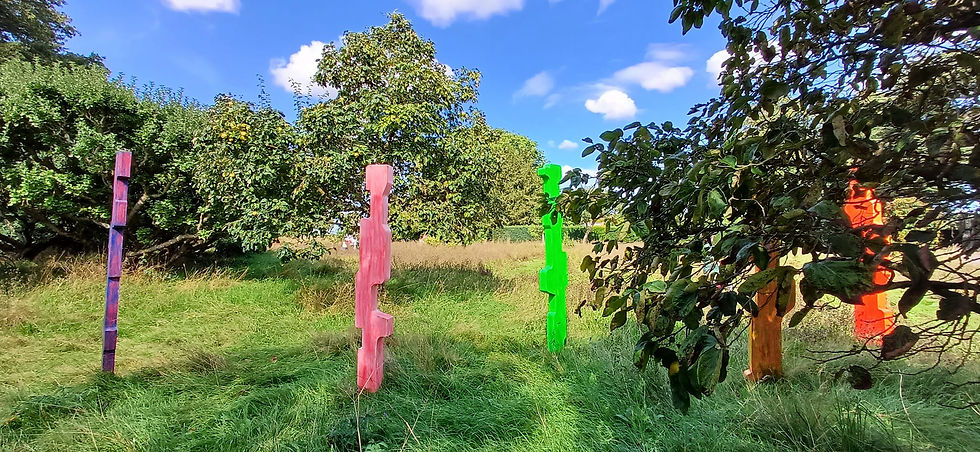
Occasional bursts of colour & interactive artworks introduce an element of surprise & delight. These features encourage exploration, subtly guiding the visitor through the garden experience.
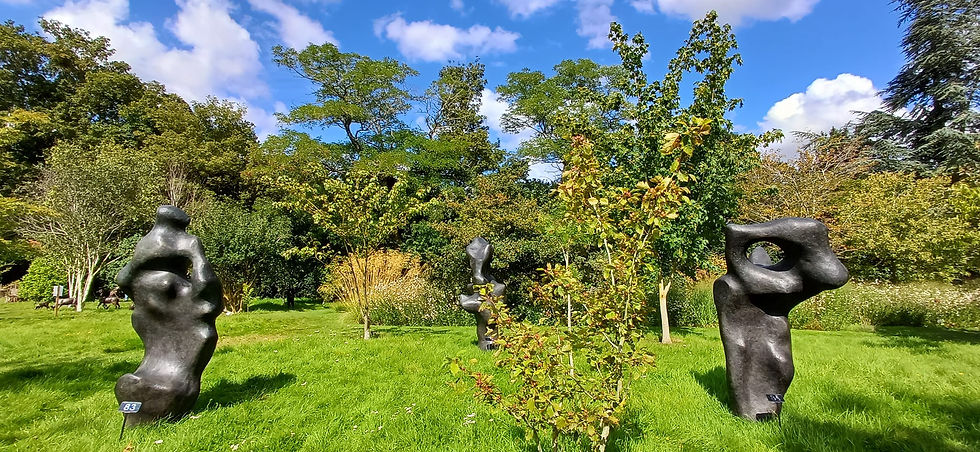
Moving toward the southern edge of the walled garden, the sculptures become more substantial in form. Some works recall the sculptural language of Eduardo Villa — torso-like figures whose smooth, sinuous metal surfaces contrast with the rough bark & pale green textures of the surrounding vegetation. Their presence feels almost animate, as if they might come to life when unobserved.
One of the more intriguing landforms is a spiral grass pit — a gentle, organic earthwork that introduces sculptural topography into the otherwise level landscape. While visually appealing, its location currently offers limited opportunity for visitor interaction. Positioned more prominently along the primary axis from the hall & perhaps enlarged to respond to the scale of the broader vista, it could potentially become a more active gathering or contemplative space.
However, during my visit this area appeared to be evolving & its partial use as a working horticultural & agricultural zone likely influences the current design decisions.
From the western edge of the walled garden & moat, long views extend along the principal axis connecting the hall to the estate entrance. This vista is framed by dense avenues of trees & more formal planting beyond, reinforcing the classical estate structure that underpins the landscape design.
Further south, stone sculptures inhabit the outer garden spaces, positioned carefully in relation to planting backdrops & long views. These pieces feel integrated into the landscape rather than imposed upon it.
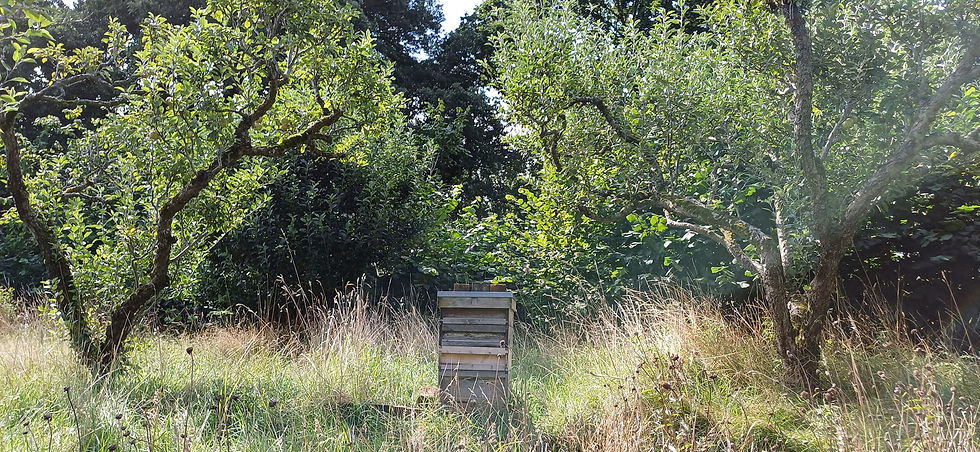
A transition into a sheltered woodland garden introduces a striking contrast. Informal openings through the vegetation form tunnel-like passages that invite visitors into a more enclosed & intimate space. Dappled light filters through the canopy while art installations appear discreetly within the foliage, reinforcing an overarching theme of the human form existing in harmony with nature.
This woodland area encourages visitors to slow their pace & linger. Yet the bridges crossing the moat simultaneously draw attention back toward the highly formal interior spaces of the garden.
One of the most striking architectural features is the bespoke metal gate on the main axis leading toward the hall. Its delicate filigree design provides a fitting threshold between the informal outer landscape & the structured walled garden.
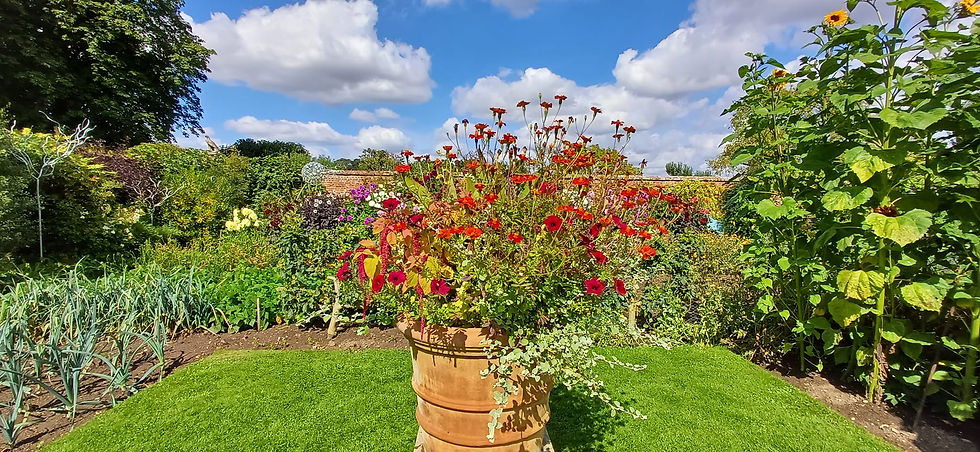
Inside the walled garden, planting becomes exuberant & richly layered. Sculptural elements, delicate glass forms & botanical installations appear throughout the planting beds — transparent mauve & blue glass droplets rising among the foliage, whimsical features hidden within borders like a gentle game of discovery. Large terracotta vessels overflowing with cascading plants suggest abundance, while vibrant dahlias & cutting flowers bring seasonal colour & vitality to the garden. In contrast, quieter corners provide benches & secluded spaces for reflection. Nearby, long growing tunnels form narrow, sheltered corridors that draw the visitor inward toward the heart of the garden. These spaces contrast strongly with the open pastoral views beyond the moat. Mixed herbaceous borders & traditional roses reinforce the identity of the garden as a classic English estate landscape, while an extraordinary variety of plant forms creates constant visual interest. Rounded clipped topiary contrasts with strappy architectural foliage, broad-leaved perennials & the playful forms of spiral topiary.
Among the most joyful moments in the garden are the elegantly tall sunflower bunches, their tall stems & vivid yellow and rusty-orange blooms appearing to stretch endlessly toward the sky.
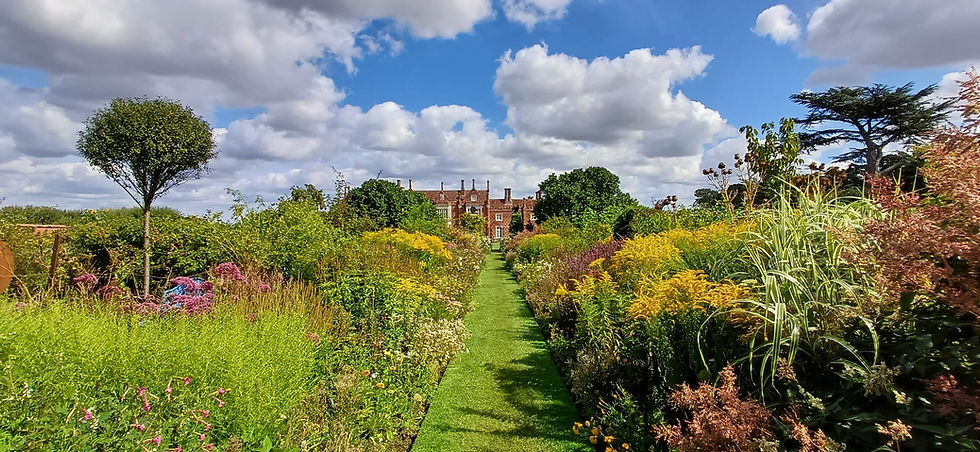
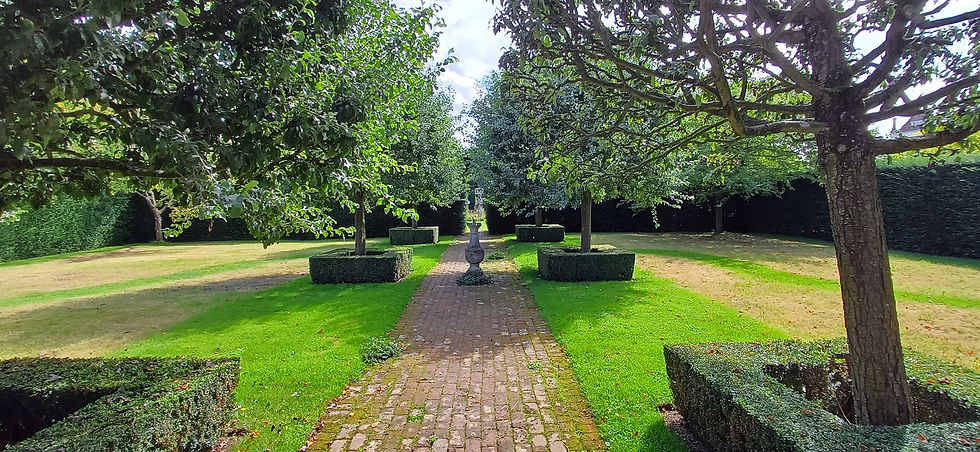
The journey concludes in the formal northern garden, where clipped box topiary & tall yew hedges frame views of the Hall itself. Here the relationship between architecture & landscape becomes most evident, creating a space that feels harmonious and timeless — a quintessential English garden setting.
Helmingham Hall offers a compelling example of how historic landscapes can embrace ecological sensitivity, contemporary art & evolving horticultural practice while preserving the essential character of the estate landscape. It is, quite simply, a place that invites return visits.
















Comments