
NATURE-BASED INTERVENTIONS FOR COASTAL RESILIENCE IN SUFFOLK
- R S
- Mar 6
- 1 min read

Last week, I attended a fascinating talk on how the East Anglian coastline is being managed with more nature-based interventions that improve resilience. Traditionally, coastal defences have relied on hard engineering solutions—groynes, sea walls, breakwaters, and imported rock from the Netherlands and elsewhere—strategically placed to reduce tidal forces.
While effective in the short term, these methods are capital-intensive, require ongoing maintenance & can unintentionally disrupt sediment movement, coastal habitats & other natural processes.
In contrast, more recent design & management strategies along the Suffolk & East Anglian coastline focus on nature-based solutions. Tidal marsh creation, for example, acts as a natural buffer, slowing & spreading tidal flows across wider areas. These intertidal landscapes dissipate wave energy, reduce erosion & flood risk for nearby homes & villages, trap sediments to maintain land levels & provide rich habitat for wildlife.
From a Landscape Architect’s perspective, this represents a significant shift. Coastal management is moving beyond single-function defences toward integrated landscape systems that combine climate resilience, ecological enhancement, long-term spatial planning & community protection. Designing these systems requires a holistic understanding of geomorphology, hydrology, habitat creation, visual impact & socio-economic value.
I am particularly curious whether robust comparative cost–benefit analyses exist for traditional versus nature-based approaches, especially when whole life-cycle costs, ongoing maintenance, environmental externalities & long-term adaptive capacity are considered.
As climate pressures intensify, the role of landscape architecture in shaping resilient, multifunctional coastal landscapes feels more vital than ever.
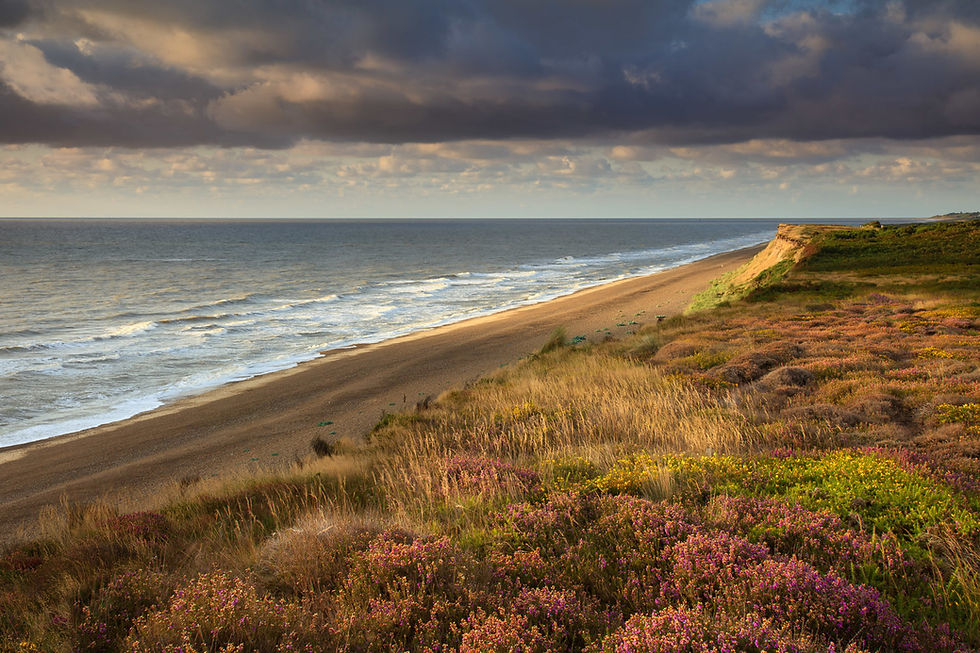
Image of the Suffolk Coastline

Comments